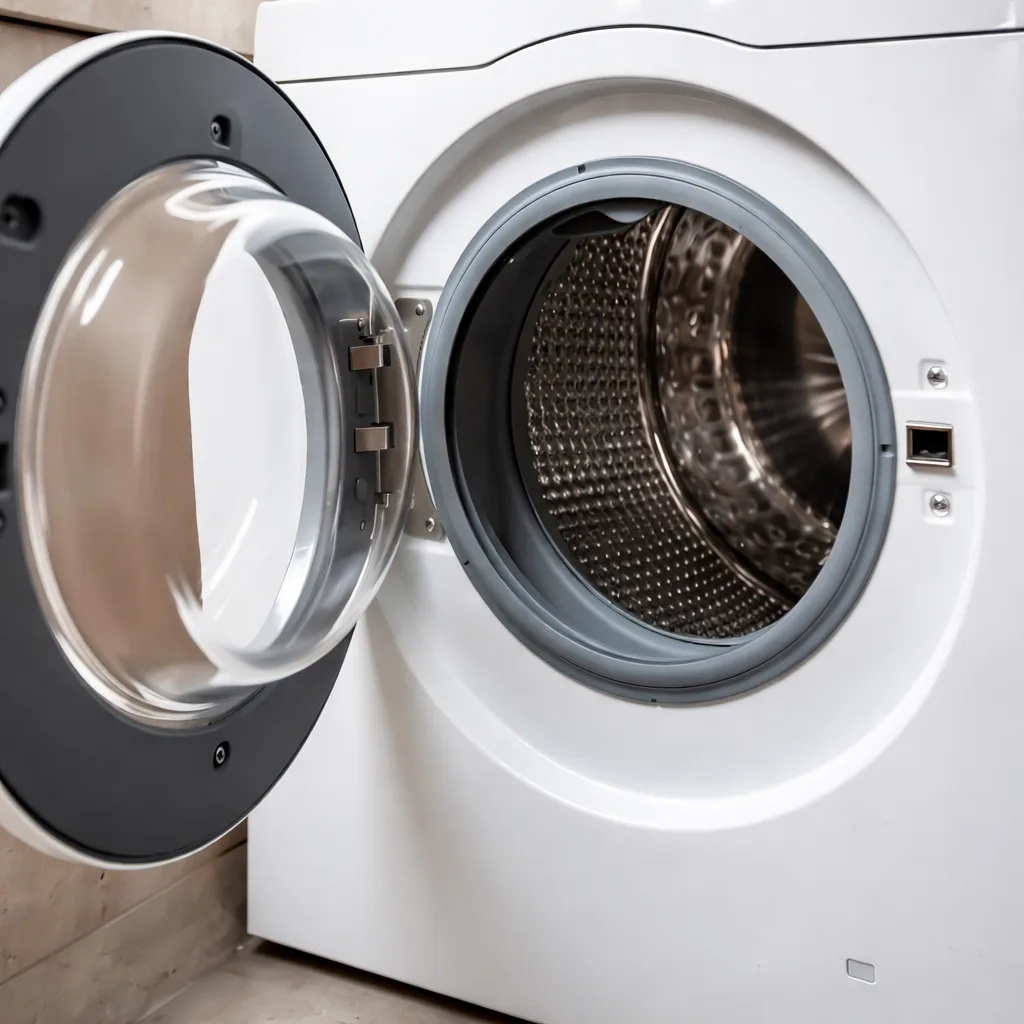
Front-load washer repair covers door seal and gasket leaks, door latch faults, mould and smell in the seal, drum bearing noise, and drain-pump faults. The provider works on the machine in your laundry room and repairs the faulty part, matched to the make and model.
Front-load washers wash differently from top-load machines. They use less water, they spin faster, and they clean with tumbling rather than an agitator.
The door seal is the part front-load owners meet most often. It keeps the water in, it traps debris, and it grows mould if it stays damp. The door latch is next: the machine will not start, fill, or spin unless the latch engages.
Why is my front-load washer leaking from the door?
The door seal — the rubber gasket around the door — is the most common front-load fault. It seals the door against the drum, and it takes a beating: hot water, detergent, coins, and zips all pass across it. Over time it tears, hardens, or grows mould in its folds.
A torn seal leaks from the front of the machine, usually during the wash or spin. A seal with trapped debris leaks in the same place. A seal that has gone hard with age no longer presses evenly against the door, and water finds the gap.
Replacing a seal is a proper repair, not a clean-up job. The old seal comes out, the seat is cleaned, and the new seal is fitted and checked with a full cycle.
What happens when the door latch fails?
The door latch does two jobs: it locks the door, and it tells the machine the door is locked. If the latch does not engage, the machine will not start. If it engages but the machine does not know it has, the machine will not start either.
- Describe the fault — nothing happens, or it stops with a door error?
- The latch is tested first — a small part and a common failure.
- If the latch is sound, the wiring and control board are checked.
- The faulty part is replaced and the door is tested.
- Run one more full cycle to confirm the latch stays locked.
A latch fault usually shows up as a machine that does nothing when the start button is pressed, or a machine that starts and then stops with a door error. If the latch is sound, the fault is usually in the wiring or the control board.
Forcing the door open on a front-load machine that is full of water floods the floor, and forcing a locked door breaks the latch. If the door will not open, the machine needs to be drained first.
Why does my front-load washer smell?
The smell in a front-load washer almost always comes from the door seal. Water sits in the folds of the gasket, detergent residue feeds mould, and the closed door keeps it damp. The result is a musty smell on the laundry.
Cleaning helps: wipe the seal dry after each wash, leave the door open between washes, and run a hot cleaning cycle with the right cleaner. But cleaning does not fix a seal that has gone hard, torn, or grown mould through the rubber.
When the mould is in the rubber itself, the seal needs replacing. Using too much detergent makes the problem worse, because excess detergent leaves residue in the seal and the drum.
Why is my front-load washer loud on spin?
A front-load washer that roars or grinds on spin usually has a worn drum bearing. The bearing carries the drum, and it wears with age and with heavy loads. The noise starts quietly — a low rumble on fast spin — and grows louder over months.
A worn bearing is a bigger job than a seal or a latch. The drum has to come out, the bearing is pressed out and a new one pressed in, and the machine is reassembled and tested.
Other spin noises have other causes. A banging noise is usually an unbalanced load or a loose counterweight. A clicking noise is usually something caught between the drum and the tub — a coin, a bra wire, or a small object that slipped through the seal.
What causes drain-pump faults on a front-load washer?
The drain pump on a front-load machine works hard: it pushes the water out after every wash and rinse. When it fails, the machine will not drain, the drum stays full, and the door stays locked.
The pump filter is checked first. It sits behind a small flap at the bottom of the machine and catches coins, hair, and lint. A clogged filter stops the drain just as surely as a failed pump, and it is a much cheaper fix.
If the filter is clear and the machine still will not drain, the pump is tested. A pump that hums but does not move water, or stays silent when it should run, has usually failed. The pump is replaced and the machine is given a full test cycle.
What affects the cost of a front-load repair?
The part is the main factor. A latch or a pump filter is a quick job; a door seal takes longer; a drum bearing is the big one. The age of the machine matters too — a bearing on a twelve-year-old machine is a different decision from a bearing on a four-year-old one.
Parts availability depends on the brand. Familiar brands usually have parts on hand sooner than rare models, and the provider will say upfront if a part must be ordered. The work, and which part it needs, is agreed before anything starts.
For a front-load machine with a leaking seal or a latch that will not engage, see front-load washer repair in North Carolina — this service covers Cornelius, NC, where providers see these faults often.