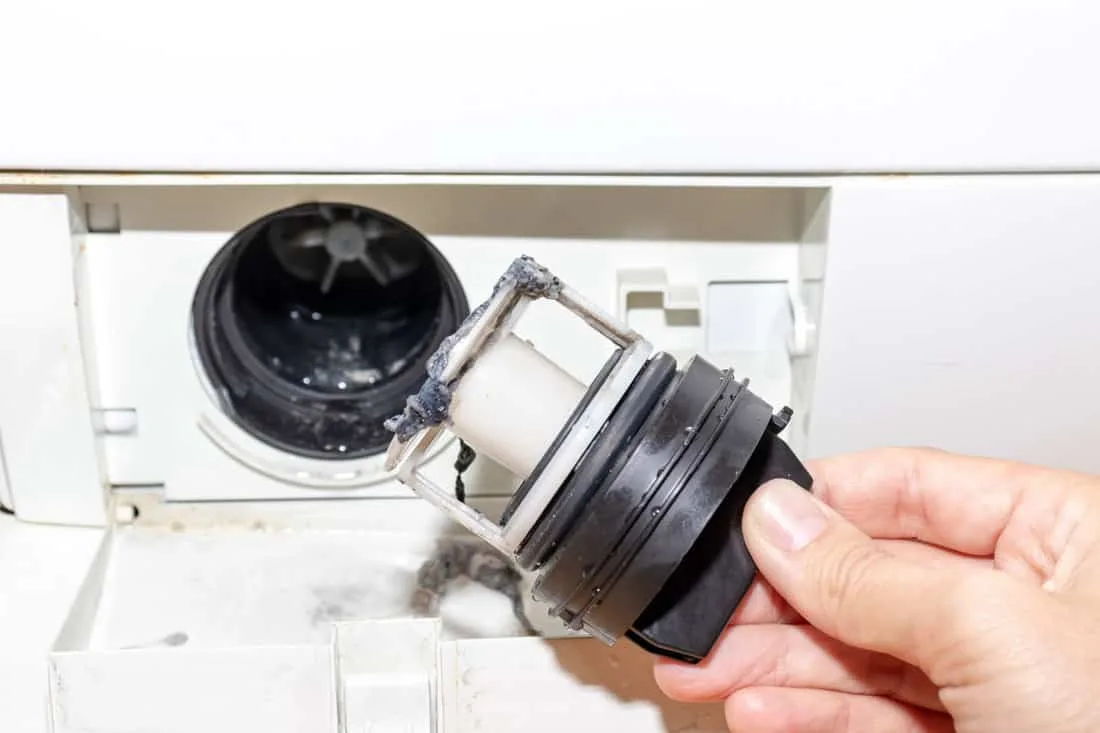
When a washer will not drain, the trouble is usually a blocked drain pump filter, a clogged or kinked drain hose, or a drain pump that has stopped working. Less often, the lid switch on a top-load washer or the door lock on a front-load washer is at fault, because the machine will not start the drain and spin cycle until it knows the lid or door is closed.
A washer that will not drain is one of the most common washer problems in North Carolina homes. The cycle ends, the drum is still full of water, and the clothes inside are heavy, cold, and soaking wet.
The same fault shows up on front-load and top-load washers alike, from a high-efficiency machine in an upstairs laundry room in a Matthews townhouse to a garage washer in Monroe,
and a machine full of standing water is a mess waiting to spread onto the floor.
The good news is that a washer that will not drain is usually a simple problem with a simple cause. Most of the time the water has nowhere to go because something is blocking its path out of the machine.
This post walks through each cause in the order a repair provider would check them, so you can work out what is wrong with your own machine and decide whether it is a quick check you can do yourself or a job for a provider.
Before you start, one safety note matters more than anything else in this post. A washer full of water is heavy, and water and electricity do not mix.
Never reach into a machine that is plugged in and full of water while you are standing in water on the floor, and never tip a full washer on its side to empty it.
The checks below are safe to do with the machine switched off and unplugged, and with towels and a shallow tray ready for the water that comes out.
What does a washer that will not drain look like?
The most obvious sign is standing water in the drum at the end of a cycle, with clothes that are far wetter than they should be. Sometimes the machine stops mid-cycle and will not move on.
Sometimes it hums or buzzes during the drain part of the cycle but the water level does not drop. Sometimes it makes no sound at all when it should be draining.
Other clues help narrow it down. A musty smell that appears suddenly often points to water sitting in the machine for a long time, which happens when the drain path is partly blocked.
An error code on the display, if your machine has one, is worth writing down exactly as it appears, because it narrows the fault to a part before the machine is opened.
And if the machine drains fine on some cycles but not on others, the problem is more likely to be a switch or a sensor than a blockage, because a blockage does not come and go.
Why is the drain pump filter the first thing to check?
On most front-load washers there is a small filter in front of the drain pump, usually behind a small flap or panel at the bottom front of the machine. Samsung, LG, Whirlpool and GE front-load washers all put the filter in the same place.
Its job is to catch coins, hair grips, buttons, lint, and anything else that slips out of pockets before it reaches the pump. Over time that filter fills up, and when it does, water cannot pass through it fast enough. The machine drains slowly, then stops draining altogether.
This is the first thing to check, and it is also the most common fix. Put towels on the floor and a shallow tray under the filter flap, then open it and unscrew the filter slowly — water will come out, so go gently and be ready to catch it.
Pull out whatever is trapped in the filter, rinse it under a tap, and screw it back in firmly. If the machine drains normally on the next cycle, you have found your problem. Check the filter every few months, and check pockets before every wash.
Could a clogged or kinked drain hose be the cause?
The drain hose carries water from the machine to the drain standpipe or the laundry sink, and it is the next place a blockage can hide. The hose can clog with lint, detergent residue, and the same small objects that block the filter.
It can also kink if the machine has been pushed back too hard against the wall, or if it has shifted during a spin cycle and pinched the hose against the wall or the floor.
To check it, pull the machine out just far enough to see the hose, with the machine switched off and unplugged. The hose should run in a smooth curve from the back of the machine up to the standpipe, with no sharp bends and no flattened sections.
If it is kinked, straighten it out and push the machine back carefully. If the hose is clogged, you can disconnect it at the machine end — with a bucket and towels ready — and run water through it to clear it.
How do you know the drain pump itself has failed?
If the filter is clear and the hose is clear, the drain pump is the next suspect. The pump is a small electric motor with an impeller that pushes water out of the machine, and like any motor it wears out.
A pump that is starting to fail often makes a loud humming or grinding noise during the drain cycle, or it runs but moves very little water. A pump that has failed completely usually makes no sound at all, or a faint click as it tries to start and gives up.
There is no safe home fix for a failed pump. The pump sits inside the machine, behind panels, and replacing it means opening the machine, disconnecting hoses and wiring, and fitting the right part for the exact model.
If your machine hums, grinds, or stays silent when it should be draining, and the filter and hose check out, that is the point to call a repair provider and describe what the machine is doing and what you have already checked.
Could the lid switch or the door lock be stopping the drain?
A washer will not drain if it does not think it is safe to do so. On a top-load washer, a small switch under the lid tells the machine the lid is closed.
If that switch is broken, loose, or worn, the machine may fill and agitate normally but refuse to drain and spin, because it only drains and spins when the lid switch is engaged. A common sign is a machine that works if you press down firmly on the lid.
On a front-load washer, the door lock plays the same role. The machine locks the door at the start of the cycle and will not run the drain and spin cycle if the lock is not engaging properly.
If the door feels loose, or if the lock clicks repeatedly without catching, the lock or its wiring is the likely cause.
What to do when your washer will not drain
Start with the easy checks in order: switch the machine off and unplug it, then check and clean the drain pump filter, then look at the drain hose for kinks or clogs. Run a short drain or spin cycle with the machine empty and see whether the water clears.
If it does, the problem was a blockage and you are done.
When the filter and hose check out but the drum stays full, do not keep running cycles hoping it will clear on its own.
Each failed cycle leaves more water in the drum, and water left standing in a washer goes stale fast in a warm laundry room, especially in a North Carolina summer.
Bail out as much water as you can with a jug or a cup, mop up the floor, and leave the door or lid open so the drum can dry.
Then call a repair provider and tell them what the machine is doing — whether it hums, stays silent, or shows an error code — and what you have already checked.
- Switch the machine off and unplug it.
- Clean the drain pump filter behind the flap at the bottom front.
- Check the drain hose for kinks or a clog, with a bucket ready.
- Run a short drain cycle with the machine empty and watch the water level.
- If the water stays, bail it out and call a repair provider.